
Warum RCDevs Europas Antwort auf „Sovereignty Washing“ ist
Warum RCDevs Europas Antwort auf „Sovereignty Washing“ ist
Europa beschleunigt seine Bemühungen um digitale Souveränität. Regierungen, öffentliche Einrichtungen, Banken, Gesundheitsdienstleister, Betreiber kritischer Infrastrukturen und private Unternehmen wollen alle ihre Abhängigkeit von außereuropäischen Technologieplattformen verringern.
Aber während die Nachfrage nach souveräner Technologie wächst, wächst auch ein neues Problem: Souveränitätswäsche.
Sovereign-washing tritt auf, wenn ein Technologieanbieter Begriffe wie “souveräne Cloud”, “in der EU gehostet”, “Europäische Region”, “lokales Rechenzentrum” oder “vertrauenswürdige Cloud” verwendet, ohne dem Kunden die tatsächliche operative, rechtliche und technische Kontrolle zu geben.
Für europäische Organisationen ist diese Unterscheidung entscheidend. Eine Lösung kann in Europa gehostet werden und den Kunden dennoch von ausländischem Eigentum, ausländischer Technologie, externen Cloud-Diensten, nicht-europäischen Supportketten oder Plattformen abhängig machen, die nicht unabhängig betrieben werden können.
Deshalb muss Souveränität mehr als nur ein Schlagwort sein. Sie muss in die Architektur integriert werden.
Für Identity- und Access-Management ist dies besonders wichtig. IAM, MFA, SSO, Föderation, privilegierter Zugriff und Authentifizierung bilden die Kontrollfläche der Organisation. Wenn diese Ebene nicht souverän ist, ist die Organisation nicht vollständig souverän.
RCDevs unterstützt europäische Organisationen dabei, diese Herausforderung zu bewältigen, und zwar mit lokal, eigenständig, In Europa entwickelte Identitäts- und Zugangsmanagementsicherheitslösungen für die echte operative Kontrolle entwickelt.
Was ist Sovereignty Washing?
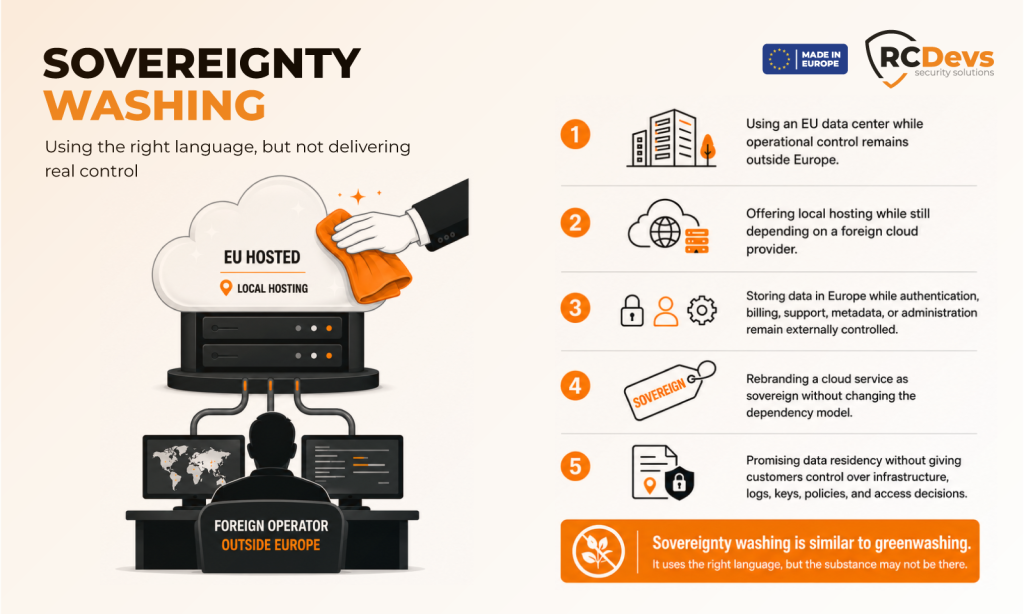
Souveränitätswäsche ist die Praxis, ein Technologieprodukt als souverän zu vermarkten, ohne tatsächliche Souveränität zu liefern.
In der Praxis kann dies Folgendes umfassen:
- Nutzung eines EU-Rechenzentrums bei gleichzeitiger Beibehaltung der operativen Kontrolle außerhalb Europas.
- “Lokales Hosting” anbieten und sich trotzdem auf einen ausländischen Cloud-Anbieter verlassen.
- Datenspeicherung in Europa, während Authentifizierung, Abrechnung, Support, Metadaten oder Administration extern gesteuert bleiben.
- Ein Cloud-Dienst als souverän neu zu branden, ohne das zugrunde liegende Abhängigkeitsmodell zu ändern.
- Vielversprechende Datensouveränität ohne Kontrolle für Kunden über Infrastruktur, Protokolle, Schlüssel, Richtlinien und Zugriffsentscheidungen.
- Souveränitätswäsche ist ähnlich wie Greenwashing. Dabei wird die richtige Sprache verwendet, aber der Inhalt stimmt möglicherweise nicht.
Für europäische Unternehmen schafft dies ein ernstes Risiko. Sie könnten glauben, eine souveräne Lösung zu kaufen, wenn sie nur einen europäischen Hosting-Standort kaufen.
Warum digitale Souveränität in Europa wichtig ist
Europas Wunsch nach digitaler Souveränität ist nicht länger theoretisch. Er wird vorangetrieben durch Regulierung, Beschaffung, Cybersicherheit, geopolitische Unsicherheit und die wachsende Besorgnis über die Abhängigkeit von außereuropäischen Technologieanbietern.
Europäische Organisationen stellen wichtige Fragen:
- Können wir unabhängig agieren, wenn ein ausländischer Anbieter ausfällt?
- Kontrollieren wir unsere eigene Identitäts- und Authentifizierungsinfrastruktur?
- Wo werden unsere Protokolle, tokens, Anmeldedaten und Zugriffsrichtlinien gespeichert?
- Wer kann auf unsere Systeme zugreifen?
- Können wir ohne externe Abhängigkeiten auditieren, migrieren, sichern und wiederherstellen?
- Sind wir nur auf dem Papier konform, oder haben wir die tatsächliche operative Kontrolle?
Diese Fragen sind für alle Sektoren relevant, aber sie sind besonders wichtig für:
- Regierung und öffentlicher Sektor.
- Finanzdienstleistungen.
- Gesundheitswesen.
- Verteidigung und Sicherheit.
- Telekommunikation.
- Energie und Versorgung.
- Fertigung.
- Transportwesen.
- Kritische Infrastruktur.
Für diese Organisationen ist digitale Souveränität nicht nur eine politische Präferenz. Es ist eine Anforderung an die Cybersicherheit und die Geschäftskontinuität.
Lokales Hosting ist nicht dasselbe wie digitale Souveränität
Eine der größten Fehlannahmen in der Souveränitätsdebatte ist, dass Hosting von Daten in Europa macht eine Lösung nicht automatisch souverän.
Tut es nicht.
Der Datenspeicherort ist nur ein Teil der Souveränität. Eine wirklich souveräne Lösung muss auch Folgendes berücksichtigen:
- Technische Kontrolle.
- Operative Kontrolle.
- Administrative Kontrolle.
- Rechtliche Haftung.
- Lieferkettenabhängigkeit.
- Dienstkontinuität.
- Auditierbarkeit.
- Tragbarkeit.
- Resilienz.
- Identitäts- und Zugriffsverwaltung.
Beispielsweise kann ein Cloud-Dienst Kundendaten in Europa speichern, aber für Software-Updates, Support, administrativen Zugriff, Metadatenverarbeitung, Identitätsdienste, Abrechnung oder Reaktion auf Vorfälle weiterhin von einem nicht-europäischen Anbieter abhängig sein.
Deshalb müssen Organisationen Souveränität auf Architekturebene bewerten, nicht nur auf Rechenzentrumsebene.
Warum IAM und MFA zentral für digitale Souveränität sind
Die meisten Diskussionen zur digitalen Souveränität konzentrieren sich auf Cloud-Hosting, Datenspeicherung und Infrastruktur. Aber eine der wichtigsten Ebenen wird oft übersehen: Identitäts- und Zugriffsmanagement.
Identitätskontrollen bestimmen, wer zugreifen kann:
- Anwendungen.
- VPNs.
- Server.
- Cloud-Plattformen.
- Administrative Konsolen.
- Datenbanken.
- Arbeitsplätze.
- Remotedesktops.
- SSH-Sitzungen.
- Privilegierte Konten.
- Sensible Geschäftssysteme.
Wenn die Identität an eine Cloud-Plattform ausgelagert wird, wird das Unternehmen von diesem Anbieter abhängig, um auf seine eigenen Systeme zugreifen zu können.
Das mag in manchen Fällen akzeptabel sein. Aber für regulierte, kritische oder souveränitätsbezogene Umgebungen schafft dies eine erhebliche Abhängigkeit.
Eine souveräne IT-Strategie muss eine souveräne Identitätsstrategie beinhalten.
Das bedeutet, dass Organisationen IAM- und MFA-Lösungen benötigen, die lokal ausgeführt werden können, sich in bestehende Verzeichnisse integrieren, die Authentifizierungsentscheidungen unter lokaler Kontrolle halten und auch dann weiter funktionieren, wenn externe Dienste nicht verfügbar sind.
RCDevs: Sovereign IAM und MFA – entwickelt für die Kontrolle vor Ort
RCDevs Security bietet Lösungen für die Identitäts- und Zugriffssicherheit, die speziell für Unternehmen entwickelt wurden, die Kontrolle, Flexibilität und Souveränität benötigen.
Die Plattform ’RCDevs“ kann eingesetzt werden vor Ort, wodurch Kunden ihre IAM- und MFA-Infrastruktur in ihrer eigenen Umgebung betreiben können.
Dadurch ist RCDevs besonders relevant für europäische Organisationen, die ihre Abhängigkeit von externen Cloud-Identitätsanbietern verringern und gleichzeitig starke Authentifizierungs-, Zugriffskontroll- und Verbundfunktionen beibehalten möchten.
Mit RCDevs können Unternehmen Folgendes sicherstellen:
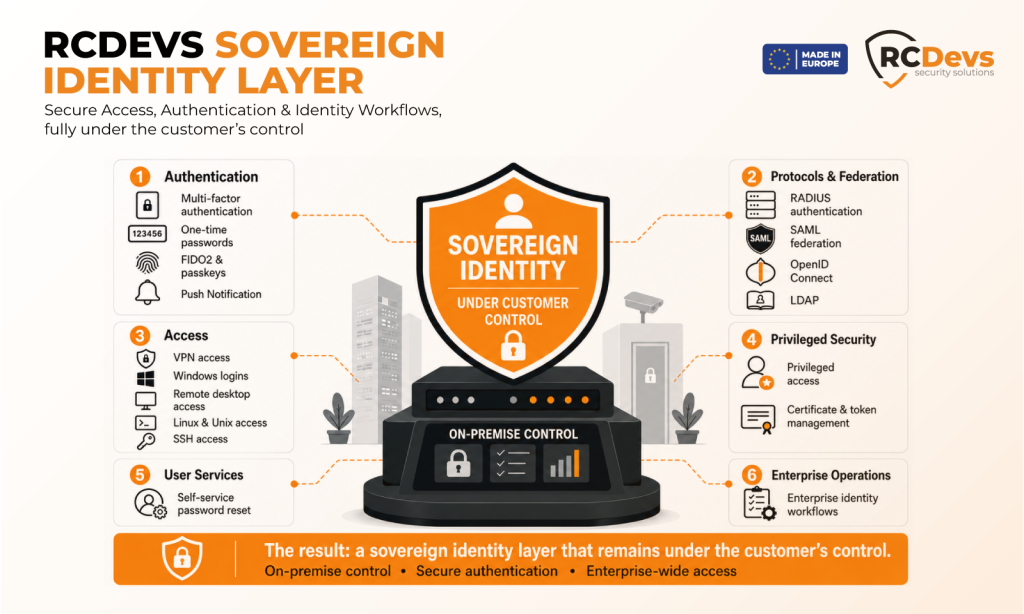
- Multi-Faktor-Authentifizierung.
- Einmalpasswörter.
- FIDO2 und Passkeys.
- Push-Authentifizierung.
- RADIUS-Authentifizierung.
- SAML-Föderation.
- OpenID Connect.
- VPN-Zugang.
- Windows-Anmeldungen.
- Remotedesktopzugriff.
- Linux- und Unix-Zugriff.
- SSH-Zugang.
- Privilegierter Zugriff.
- Passwort-Self-Service.
- Zertifikats- und token-Verwaltung.
- Identitätsworkflows für Unternehmen.
Das Ergebnis ist eine souveräne Identitätsschicht, die unter der Kontrolle des Kunden verbleibt.
Was macht RCDevs 100% Sovereign On Premise so besonders?
Für eine lokale Bereitstellung unterstützt RCDevs eine 100% – Architektur für staatliche Identitätsdaten weil der Kunde kontrolliert, wo die Plattform ausgeführt wird, wie sie betrieben wird und wie Authentifizierungsentscheidungen getroffen werden.
Das bedeutet:
- Die Software läuft in der Infrastruktur des Kunden.
- Identitätsdaten können im eigenen Verzeichnis des Kunden verbleiben.
- Authentifizierungsentscheidungen werden lokal verarbeitet.
- Richtlinien werden vom Kunden verwaltet.
- Protokolle und Audit-Trails bleiben unter der Kontrolle des Kunden.
- MFA-Registrierungs- und Authentifizierungs-Workflows werden vom Kunden gesteuert.
- Föderations- und Zugriffsregeln werden lokal verwaltet.
- Die Organisation ist nicht gezwungen, sich auf einen externen Cloud-Identitätsdienst zu verlassen.
- Die Bereitstellung kann isolierte, private oder segmentierte Umgebungen unterstützen.
- Dies ist ein entscheidender Unterschied zwischen echter Souveränität und Sovereignty Washing.
RCDevs bietet nicht einfach nur eine “in Europa gehostete” Version eines Cloud-Dienstes an. Es ermöglicht Unternehmen, ihre eigene Infrastruktur für Identitäts- und Zugriffssicherheit direkt zu betreiben.
Souveränes IAM beginnt mit AD- und LDAP-Steuerung
Viele europäische Organisationen setzen bereits auf Microsoft Active Directory, LDAP-Verzeichnisse oder hybride Verzeichnisumgebungen.
RCDevs ist so konzipiert, dass es sich in diese bestehenden Identitätsinfrastrukturen integrieren lässt. Dadurch können Unternehmen die Zugriffssicherheit verbessern, ohne die Kontrolle über die Authentifizierung an einen externen Cloud-Anbieter abzugeben.
Durch die Integration mit AD und LDAP unterstützt RCDevs Unternehmen dabei, die Kontrolle über ihre lokalen Verzeichnisse zu behalten und gleichzeitig moderne IAM- und MFA-Funktionen zu nutzen.
Dies ist wichtig, da eine Strategie für souveräne Identitäten Organisationen nicht zwingen sollte, ihre bestehende Infrastruktur aufzugeben oder die Identitätskontrolle in eine Drittanbieter-Cloud zu migrieren.
Stattdessen sollte es das stärken, was sie bereits kontrollieren.
Warum On-Premise MFA immer noch wichtig ist
Cloud-MFA ist weit verbreitet, aber nicht immer die richtige Lösung für souveränitätskritische Umgebungen.
On-Premise MFA bleibt unerlässlich, wenn Organisationen Folgendes benötigen:
- Volle Kontrolle über die Authentifizierungsinfrastruktur.
- Lokale Bedienung ohne zwingende Cloud-Abhängigkeit.
- Integration mit internen Netzwerken und Verzeichnissen.
- Starke Authentifizierung für VPN, RDP, SSH, Windows, Linux und Geschäftsanwendungen.
- Auditierbarkeit und Kontrolle über Protokolle.
- Bereitstellung in eingeschränkten oder regulierten Umgebungen.
- Hohe Verfügbarkeit über interne Standorte hinweg.
- Betrieb in getrennten oder segmentierten Netzwerken.
Für viele europäische Organisationen ist On-Premise MFA nicht veraltet. Es ist strategisch.
Es bietet Kontrolle, Widerstandsfähigkeit und Unabhängigkeit, wo reine Cloud-Modelle inakzeptable Risiken mit sich bringen könnten.
Souveräne Zugriffsverwaltung für regulierte und kritische Sektoren
RCDevs ist besonders relevant für Unternehmen, die in Branchen tätig sind, in denen Souveränität, Widerstandsfähigkeit und Zugriffskontrolle geschäftskritisch sind.
Dazu gehören:
- Öffentlicher Sektor und Regierung.
- Banken und Finanzinstitute.
- Gesundheitsorganisationen.
- Verteidungsbezogene Umgebungen.
- Energie und Versorgung.
- Telekommunikation.
- Industrie- und Fertigungsunternehmen.
- Transportanbieter.
- Managed-Service-Anbieter für regulierte Kunden.
Für diese Sektoren muss die Identitätssicherheit zuverlässig, nachprüfbar und kontrollierbar sein.
Ein Authentifizierungsfehler kann dazu führen, dass Mitarbeiter, Administratoren und kritische Systeme nicht mehr funktionieren. Die Abhängigkeit von einem nicht verfügbaren externen Identitätsanbieter kann schnell zu einem Problem für die Geschäftskontinuität werden.
Durch die Bereitstellung von IAM und MFA On-Premise können Organisationen die externe Abhängigkeit reduzieren und die direkte Kontrolle über den Zugriff auf ihre Systeme behalten.
Der Unterschied zwischen Sovereignty Washing und echter Souveränität
Sovereignty Washing konzentriert sich auf Marketingsprache.
Reale Souveränität konzentriert sich auf Kontrolle.
Eine souveränitätsgewaschene Lösung sagt:
- Ihre Daten werden in Europa gehostet.
- Wir bieten eine souveräne Region.
- Wir haben lokale Rechenzentren.
- Wir unterstützen Compliance-Anforderungen.
- Eine wahrhaft souveräne Lösung antwortet:
- Wer kontrolliert die Infrastruktur?
- Wer kontrolliert die Identitätsdaten?
- Wer trifft Entscheidungen über die Authentifizierung?
- Wer kontrolliert Protokolle und Audit-Trails?
- Wer kontrolliert Administratoren und Richtlinien?
- Kann der Kunde eigenständig agieren?
- Kann das System ohne zwingende externe Cloud-Dienste ausgeführt werden?
- Kann die Organisation den Zugang während einer Störung aufrechterhalten?
Für IAM und MFA sind diese Fragen unerlässlich.
Wenn eine Organisation die Authentifizierung nicht kontrolliert, kontrolliert sie nicht vollständig den Zugriff auf ihre eigenen Systeme.
Digitale Souveränitätscheckliste für IAM und MFA
Bevor europäische Organisationen eine IAM- oder MFA-Lösung auswählen, sollten sie sich fragen:
- Kann die Lösung vollständig lokal ausgeführt werden?
- Kann es sich mit AD und LDAP integrieren?
- Können Authentifizierungsentscheidungen lokal verarbeitet werden?
- Können Protokolle und Auditdaten unter unserer Kontrolle bleiben?
- Können wir ohne zwingende Cloud-Abhängigkeit betrieben werden?
- Unterstützt die Lösung VPN, RADIUS, SAML, OpenID Connect, Windows, Linux, SSH und RDP?
- Können wir Hochverfügbarkeit über unsere eigene Infrastruktur aufbauen?
- Kann das System in eingeschränkten, segmentierten oder isolierten Umgebungen arbeiten?
- Können wir Vendor Lock-in vermeiden?
- Können wir beweisen, wo die Kontrolle liegt?
Wenn die Antwort unklar ist, ist die Lösung möglicherweise nicht wirklich souverän.
Warum RCDevs eine gute Wahl für die digitale Souveränität Europas ist
RCDevs bietet Unternehmen eine praktische Möglichkeit, ihre digitale Souveränität auf der Identitätsebene zu stärken.
Mit RCDevs können europäische Unternehmen IAM (zu Authentifizierungszwecken) und MFA vor Ort bereitstellen, eine Integration mit bestehenden Verzeichnissen vornehmen, Authentifizierungsabläufe steuern und die Abhängigkeit von externen Cloud-Identitätsplattformen verringern.
Das ist wichtig, denn Identität ist nicht nur eine weitere IT-Funktion. Sie ist das Tor für die gesamte Organisation.
Eine souveräne Cloud-Strategie ohne souveräne Identität lässt eine große Lücke.
RCDevs hilft dabei, diese Lücke zu schließen.
Europa braucht souveräne Architektur, kein souveränes Marketing
Europas Wunsch, unabhängiger von externen Technologieanbietern zu werden, gestaltet den Markt für Cybersicherheit und Cloud neu.
Doch während immer mehr Anbieter die Sprache der Souveränität übernehmen, müssen europäische Organisationen über Schlagworte hinausblicken.
“Souveräne Cloud”, “in der EU gehostet” und “lokales Rechenzentrum” reichen nicht aus.
Wahre Souveränität bedeutet Kontrolle.
Für Identity- und Access-Management bedeutet dies die Kontrolle darüber, wo die Authentifizierung ausgeführt wird, wo Identitätsdaten gespeichert werden, wer Richtlinien verwaltet, wo Protokolle gespeichert werden und ob die Organisation unabhängig weiterarbeiten kann.
RCDevs bietet lokale IAM- und MFA-Lösungen an, die europäischen Unternehmen dabei helfen, echte digitale Souveränität in ihre Architektur zu integrieren.
Keine Souveränitätswäsche.
Souveränität nach Design.
FAQ
Was ist Souveränitätswäsche?
Sovereign-Washing ist, wenn ein Technologieanbieter eine Lösung als souverän vermarktet, ohne den Kunden echte technische, operative, rechtliche und administrative Kontrolle zu geben.
Reicht die EU-weite Ausrichtung für eine souveräne Lösung aus?
Nein. EU-Hosting kann bei der Datenresidenz helfen, aber echte Souveränität erfordert auch die Kontrolle über Infrastruktur, Zugriffsrichtlinien, Authentifizierung, Protokolle, Betrieb, Supportketten und Servicekontinuität.
Warum ist IAM für die digitale Souveränität wichtig?
IAM kontrolliert, wer auf Systeme, Anwendungen, Server, Cloud-Dienste und administrative Funktionen zugreifen kann. Wenn die Identität nicht souverän ist, kontrolliert das Unternehmen den Zugriff auf seine eigene Umgebung nicht vollständig.
Was ist Sovereign MFA?
Sovereign MFA ist eine Multi-Faktor-Authentifizierung, die unter der eigenen Kontrolle der Organisation betrieben werden kann, typischerweise On-Premise, ohne zwingende Abhängigkeit von einem externen Cloud-Identitätsanbieter.
Inwiefern trägt RCDevs zur digitalen Souveränität bei?
RCDevs fördert die digitale Souveränität durch die Bereitstellung von IAM- und MFA-Lösungen für den Einsatz vor Ort, die sich in AD und LDAP integrieren lassen, die Authentifizierungsentscheidungen unter der Kontrolle des Kunden belassen und einen sicheren Zugriff auf alle Unternehmenssysteme ermöglichen.
Ist RCDevs für regulierte Branchen geeignet?
Ja. RCDevs eignet sich besonders für Organisationen, die eine strenge Zugriffskontrolle, lokalen Betrieb, Nachvollziehbarkeit und eine geringere Abhängigkeit von externen Cloud-Identitätsdiensten benötigen, darunter der öffentliche Sektor, der Finanzsektor, das Gesundheitswesen, kritische Infrastrukturen und industrielle Umgebungen. Der Unterschied zwischen dem Anschein von Souveränität und tatsächlicher Souveränität.