
Your Cybersecurity Solution Should Adapt to Your Business. Not the Other Way Around.
Every company works differently.You have your own users, groups, administrators, contractors, applications, networks, VPNs, offices, remote workers, authentication methods, and security requirements. So why should you have to reorganize the way your company works around the limitations of your cybersecurity solution? You shouldn’t. Your security …
Multi-Factor Authentication versus Passwordless Authentication: What’s the Difference (and Why You Probably Need Both)
81% of hacking-related breaches involve stolen or weak passwords, according to the Verizon Data Breach Investigations Report (DBIR). Meanwhile, Microsoft blocks thousands of password attacks every second, from password spraying and credential stuffing to phishing campaigns targeting Microsoft 365 accounts. Passwords have served us well …

RCDevs Security on UGAP: European Cybersecurity Built for Control, Sovereignty & Choice
European governments and public institutions are reconsidering the technologies on which their essential services depend. Cybersecurity is no longer just about stopping attacks. Governments must also consider where their data is stored, who operates the underlying infrastructure, which jurisdictions may apply, and whether critical services …
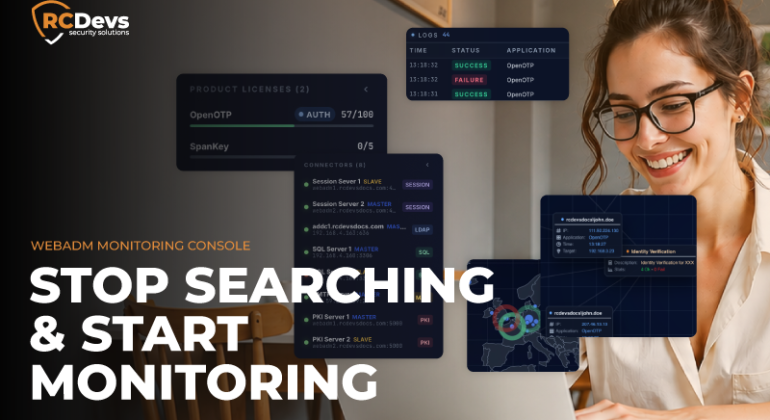
WebADM Monitoring Console: Stop Searching & Start Monitoring
Authentication infrastructure has a talent for being invisible, right up until a connector goes down, a backend slows to a crawl, or failed logins begin appearing from somewhere unexpected. At that point, nobody wants a scavenger hunt through status pages, log files and browser tabs. …
Why RCDevs Is Europe’s Answer to Sovereignty Washing
Europe is accelerating its push for digital sovereignty. Governments, public institutions, banks, healthcare providers, critical infrastructure operators, and private companies all want to reduce their dependence on non-European technology platforms. But as demand for sovereign technology grows, so does a new problem: sovereignty washing. Sovereignty …
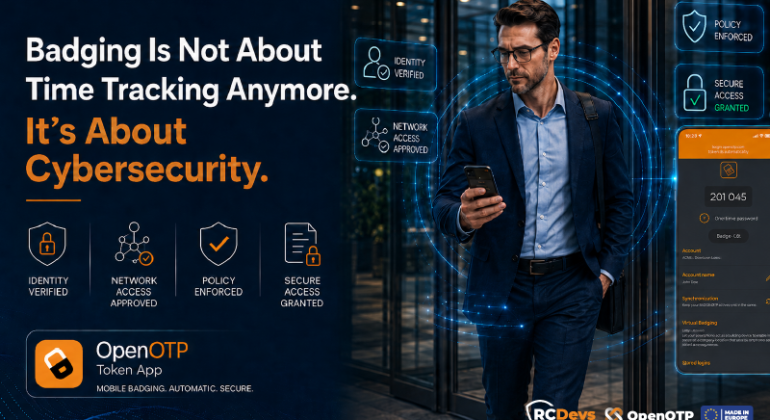
Badging Is Not About Time Tracking Anymore. It’s About Cybersecurity.
For years, badging has been seen as an HR tool. A way to record when employees start working, when they stop, and whether their working hours match expectations. Useful? Yes. Cybersecurity-grade? Not usually. But OpenOTP Mobile Badging changes that. This is not a badge that …

When your identity provider’s renewal pricing skyrockets: switching to an on-premise alternative at a third of the cost
There is a moment many IT teams will recognise. The renewal notice for your cloud identity platform arrives, and the number on it bears no relation to what you signed three years ago. You built your entire authentication layer on this service. Every VPN, every …
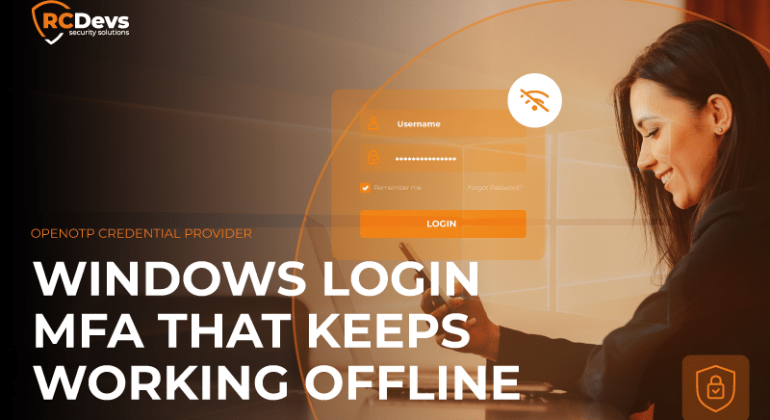
Windows MFA That Keeps Working Offline: Strengthening Windows Logins with OpenOTP Credential Provider
Windows login security is often treated as a network-dependent control. Users authenticate to a domain, MFA is checked against a backend, and access is granted only when the endpoint can reach the authentication service. That model works well inside the corporate network, but it creates …
Why Linux Is a Smart Alternative to Microsoft, and Where RCDevs fits in
For many organizations, the Linux versus Microsoft debate is no longer just about operating systems. In Europe, it is increasingly tied to digital sovereignty, resilience, and the ability to reduce strategic dependence on a small number of foreign technology providers. The European Commission now explicitly …
Closing Entra ID MFA Gaps with RCDevs OpenOTP
The Current Identity Reality Today’s businesses are using a mix of SaaS applications, legacy systems, hybrid workstations, and remote access tools. Microsoft Entra ID (Azure AD) and Office 365 form the backbone of most cloud identity strategies and include native multi-factor authentication (MFA), FIDO2, and …