
Why Linux Is a Smart Alternative to Microsoft, and Where RCDevs fits in
Why Linux Is a Smart Alternative to Microsoft, and Where RCDevs fits in
For many organizations, the Linux versus Microsoft debate is no longer just about operating systems. In Europe, it is increasingly tied to digital sovereignty, resilience, and the ability to reduce strategic dependence on a small number of foreign technology providers. The European Commission now explicitly frames digital sovereignty around control of critical digital capabilities and reduced strategic dependencies, while its Data Union Strategy lists safeguarding EU data sovereignty as a priority.
That shift changes the meaning of infrastructure choices. Linux is no longer only a technical preference or a cost discussion. It is becoming part of a broader strategy: keeping more control over systems, data, identity, and long-term architecture. The EU’s Digital Europe Programme reflects the same logic, noting that the pandemic and the war in Ukraine exposed Europe’s dependence on systems and solutions from outside the region and the need to strengthen EU digital capacities.
Why European digital sovereignty matters in the Linux debate
European digital sovereignty is not about isolation. It is about making sure critical services, sensitive data, and core administrative capabilities are not overly dependent on external platforms, legal regimes, or vendor roadmaps. That is why open standards, interoperability, and open-source solutions are getting more attention across European public administration.
This is exactly where Linux becomes relevant. Linux gives organizations a more open operating foundation, more flexibility in deployment, and a clearer path away from vendor lock-in. Germany’s public-sector openDesk initiative makes that connection directly, describing open-source software as a way to improve transparency, interoperability, and freedom from vendor lock-in in public administration IT.
Governments are already starting to step away from dependency
It would be inaccurate to say that European governments are abandoning Microsoft overnight. What is happening instead is more strategic and more important: governments are reducing dependency, building alternatives, and creating room to choose.
France has already embedded sovereignty into its public-cloud doctrine. On the official government digital strategy site, the updated “Cloud au centre” approach states that sensitive public-sector data should be hosted either on sovereign internal state cloud services or on trusted commercial cloud offerings qualified by ANSSI and immune to extraterritorial regulation.
France and Germany also signed a joint declaration in February 2024 to strengthen the digital sovereignty of public administration. Their stated priorities include jointly developing a sovereign suite of digital products based on interoperable open-source solutions for public-sector use.
Germany offers another clear example. The state of Schleswig-Holstein says openly that it wants to become more independent from large companies such as Microsoft through open-source applications. At the federal level, Germany created ZenDiS, the Centre for Digital Sovereignty, and supports openDesk, an open-source office and collaboration suite commissioned by the Federal Ministry of the Interior as an alternative to proprietary workplace tools.
Why Linux makes sense beyond politics
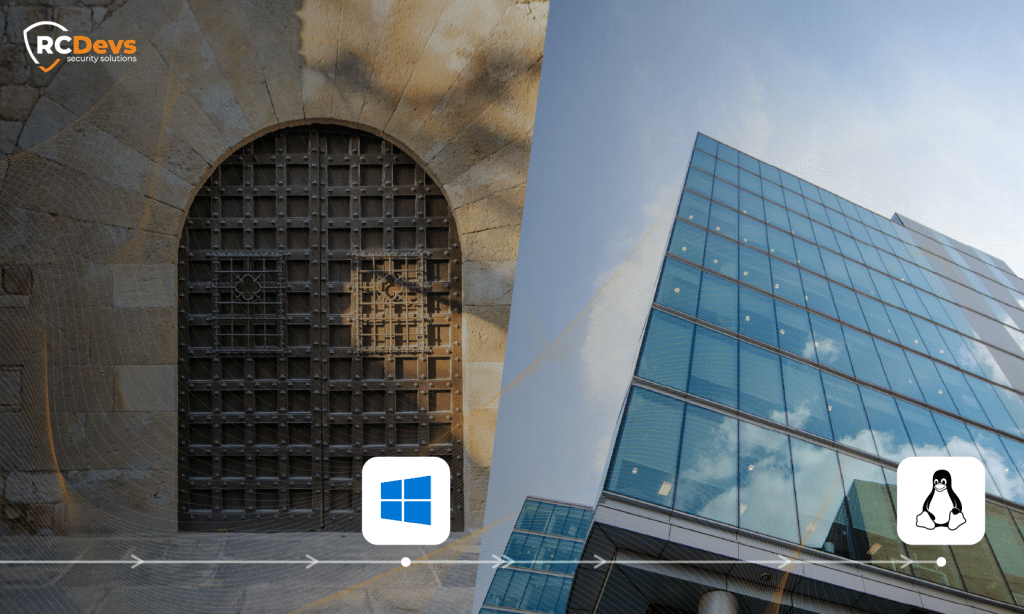
This is why Linux makes sense as more than a symbolic choice. It gives organizations a foundation they can shape, audit, and maintain on their own terms. It supports a more modular architecture and avoids tying every layer of the environment to one vendor’s commercial and technical decisions.
For European organizations, that matters even more in sectors where continuity, compliance, and long-term control are critical. The real value of Linux is not that it “beats” Microsoft in every scenario. It is that it gives organizations more room to decide how their systems should run, evolve, and integrate with the rest of their infrastructure.
But the operating system is only part of the story
A Linux strategy is not complete if identity and access still remain fragmented or overly dependent on external control planes. Most organizations are hybrid. They still have Windows systems, Active Directory, VPN access, remote users, legacy services, and cloud applications.
That is why the real sovereignty question is not only “Which operating system do we use?” It is also “Who controls authentication, MFA, access policies, and the trust layer behind the environment?” Linux helps with the foundation. Identity decides who actually controls it.
Why RCDevs fits this European shift
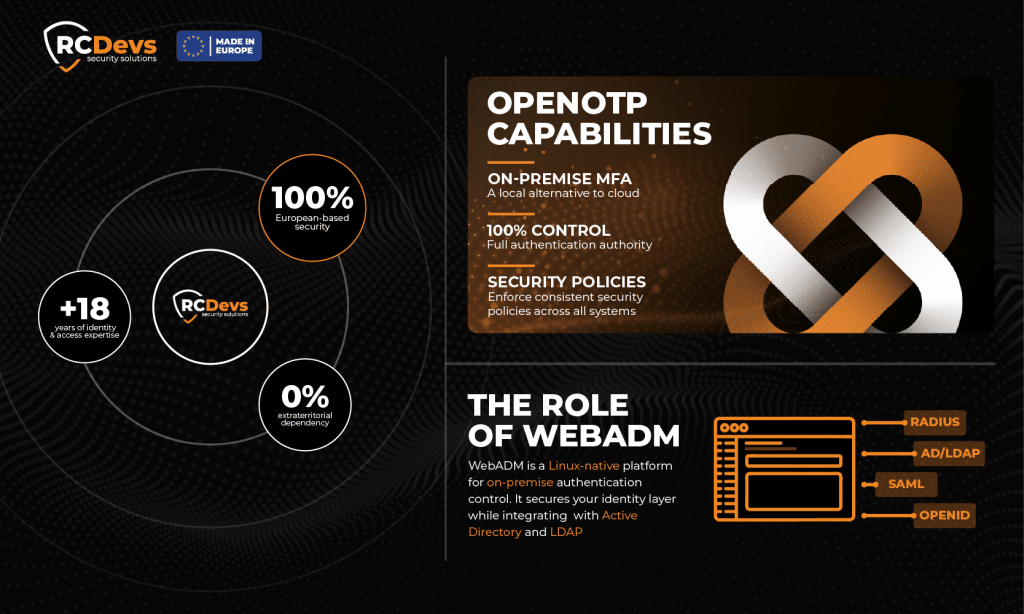
RCDevs Security is particularly well aligned with the growing European focus on digital sovereignty and control. As a Luxembourg-based R&D company with over 18 years of expertise in identity and access management, RCDevs has built its architecture around a core principle: organizations must retain full ownership and control over their authentication infrastructure and sensitive data.
At the center of this approach are WebADM and OpenOTP. Unlike cloud-first identity platforms, RCDevs solutions are designed to be deployed on-premise or within controlled private environments, ensuring that authentication flows, credentials, and access policies remain entirely under the organization’s authority. No external dependency is required to operate critical security functions.
This becomes especially relevant in a Linux-first strategy. WebADM runs natively on Linux, providing a robust and sovereign foundation for identity services. OpenOTP complements this by delivering strong multi-factor authentication that integrates easily with existing identity stores such as Active Directory and LDAP, as well as external identity providers like Entra ID, Google Workspace, or Okta (and any other cloud systems).
The key difference lies in where control resides.
Even when integrating with third-party systems, RCDevs acts as the central authentication authority. Policies, MFA decisions, user data handling, and access logic are enforced locally, not delegated to external cloud providers. This means organizations can leverage interoperability and maintain compatibility across heterogeneous environments, without surrendering control of their identity layer.
RCDevs also extends this control across both Linux and Microsoft ecosystems. Through its Windows Credential Provider and support for Remote Desktop, VPNs, SSH, web applications, and network access (via RADIUS, SAML, OpenID Connect, and more), it enables consistent security enforcement across all access points. Whether users connect to Linux servers, Windows workstations, or cloud services, authentication remains governed by the same centralized, sovereign platform.
In practical terms, this allows organizations to:
- Retain 100% control over authentication data and flows
- Avoid reliance on external cloud-based identity providers
- Enforce consistent security policies across all systems
- Integrate freely with existing infrastructure without lock-in
- Transition toward more sovereign architectures without disruption
Linux provides the independent infrastructure layer. RCDevs secures the identity layer on top of it, without compromise.
This combination is particularly relevant for European enterprises, public-sector organizations, and regulated industries seeking to reduce dependency while maintaining interoperability. It enables a gradual, controlled evolution toward sovereignty, rather than a disruptive, all-or-nothing transformation.
The move from Microsoft dependency toward Linux and open infrastructure is becoming part of a wider European push for sovereignty, resilience, and strategic autonomy. Governments are not all making the same choice, but the direction is clear: reduce critical dependencies, invest in interoperable open technologies, and rebuild control over sensitive systems and data.
Linux makes sense in that context because it supports flexibility, transparency, and long-term control. RCDevs makes sense because sovereignty is not only about the operating system. It is also about who owns the identity, access, and policy layer that protects the environment every day.
If you are looking to regain control over your infrastructure while maintaining full interoperability with your existing systems, now is the time to act. Contact us today to discover how RCDevs can help you build a secure, sovereign, and future-proof identity architecture.